Setup · 4 min read · updated 4 September 2026
First the tyre's range, then the rim's
Every product page on this site gives a pressure range for each size: it is the manufacturer's, and you do not go beyond the upper limit. On a hookless tubeless rim, the upper limit is the rim's, often 5 bar or less: it overrides the tyre's.
Within the range, the right setting depends on three things: the tyre's width, the rider's weight with the bike, and the surface.
Three simple rules
- The wider the tyre, the less pressure it needs. A 25 mm at 6 bar and a 32 mm at 4.5 bar carry the same load with the same deformation.
- The rougher the ground, the lower you go. Lower pressure absorbs instead of bouncing, and real speed goes up on cobbles, gravel or roots.
- A tubular accepts more pressure than a clincher, because it cannot pinch. That is no reason to go to the maximum: on open road, 7 bar in a 25 mm tubular is plenty.
Starting values
For a rider of 70 to 80 kg, kit included. Add 0.2 to 0.3 bar per 10 kg, and subtract as much below. The rear wheel carries more: 0.3 bar more than the front.
| Tyre | Width | Dry, good surface | Wet or rough |
|---|---|---|---|
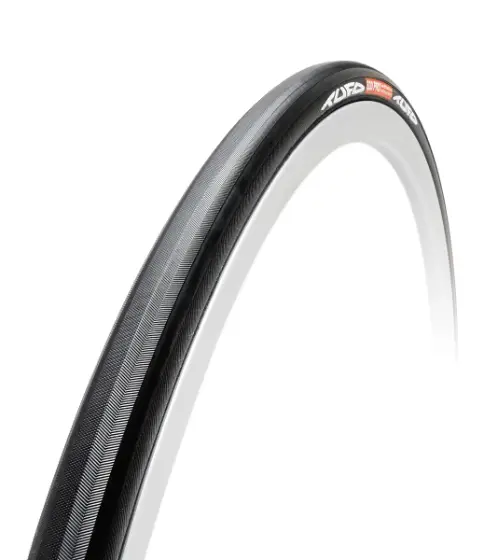
| Road tubular (Elite S3, Hi-Composite Carbon) | 23 – 25 mm | 7 – 8 bar | 6 – 7 bar |
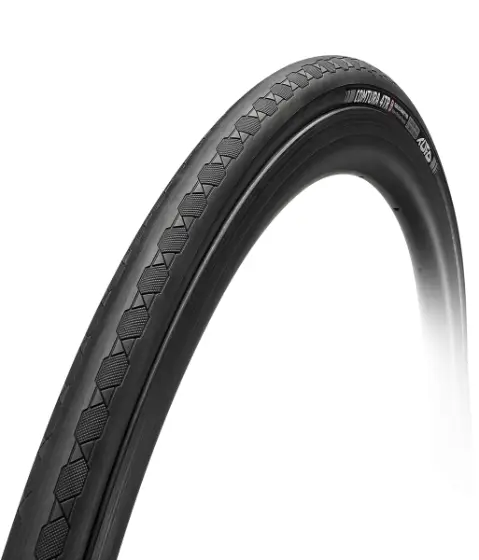
| Road tubed clincher (Comtura Duo, Calibra Plus) | 25 – 28 mm | 6 – 7 bar | 5.5 – 6 bar |
| Road tubeless (Comtura TR, Endurance 7 TR) | 28 – 32 mm | 4 – 5 bar | 3.5 – 4.5 bar |
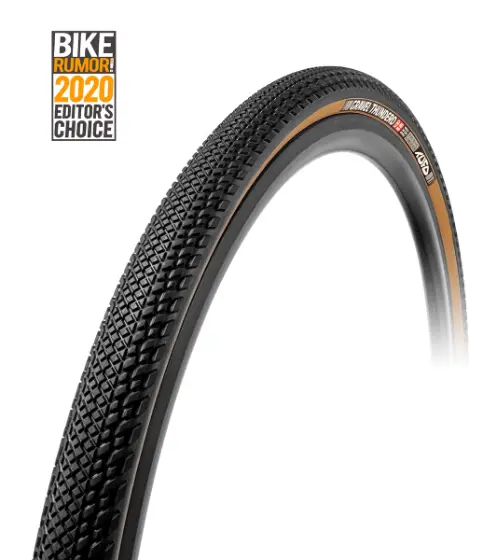
| Gravel tubeless (Speedero, Thundero, Swampero) | 36 – 40 mm | 2.8 – 3.5 bar | 2.2 – 2.8 bar |
| Gravel tubeless | 44 – 48 mm | 2.2 – 2.8 bar | 1.7 – 2.2 bar |
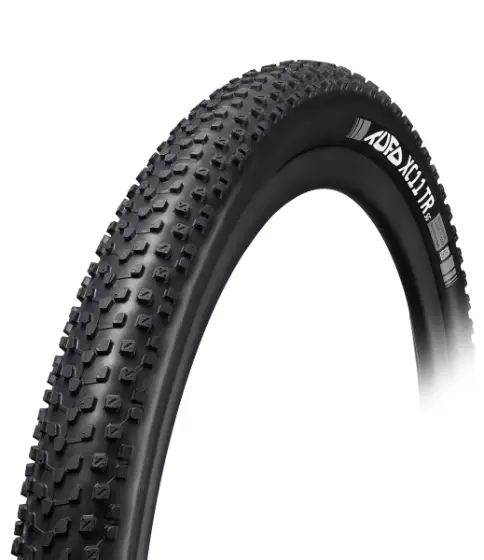
| MTB tubeless (XC TR SG) | 29 × 2.35 | 1.6 – 2 bar | 1.3 – 1.6 bar |
| MTB tubular (XC2 to XC6) | 2.0 – 2.2 | 1.5 – 1.8 bar | 1.2 – 1.5 bar |
| Cyclo-cross tubular | 32 – 33 mm | 1.8 – 2.2 bar | 1.4 – 1.8 bar |
How to know it is right
Too much pressure: the bike bounces, your hands tire, the tyre slides away suddenly in corners. Too little: the tyre squirms in turns, the rim hits on bumps, and in tubeless the tyre can “burp” air under load. The right setting is found in steps of 0.2 bar, on the same course, and written down. A workshop gauge is better than a mini-pump's.
Track and indoor tubulars are the exception: 10 to 15 bar on an indoor track, up to 16 bar in cycle ball, as stated on their product pages. These are uses with no possible puncture on the floor, where only responsiveness counts.